Montana is one of the most visually stunning states in the country. From the jagged peaks of Glacier National Park to the sweeping open plains of the eastern corridor, the landscape here is nothing short of extraordinary. If you are fortunate enough to own a vacation home in this remarkable state, then one of your greatest design opportunities is also one of the most obvious: bring the outside in. Learning how to maximize natural light home design principles in a mountain setting is both an art and a science, and when done well, it transforms a simple retreat into a soul-restoring sanctuary.
Whether your property sits on a wooded hillside, overlooks a river valley, or commands a ridgeline with 360-degree panoramas, thoughtful design choices can ensure that every room celebrates the landscape surrounding it. This guide walks you through the key strategies for maximizing mountain home views and flooding your interiors with the natural light that makes Montana living so special.
Understanding the Montana Sun and Landscape Before You Design
Before diving into specific techniques, it helps to understand what you are working with. Montana sits at a relatively high latitude, which means the sun traces a lower arc across the sky compared to southern states. In winter, sunlight enters at a shallow angle, making south-facing windows especially valuable for passive solar gain and warmth. In summer, the sun rises high and the days stretch long, bathing the landscape in golden light for hours on end.
The terrain itself also shapes your design decisions. Mountain home views in Montana often involve layered depth, with foreground meadows, mid-range forest slopes, and distant snow-capped summits. This kind of layered scenery rewards large, unobstructed window openings. Unlike a flat suburban lot where a neighbor’s fence might define your view, a Montana property often gives you a living canvas that changes with every season, every weather system, and every time of day.
Understanding the relationship between the sun’s path and your specific site is the foundation of good window placement architecture. Hire a designer or architect who is familiar with mountain properties and can perform a solar analysis of your lot before finalizing any floor plan.
Strategic Window Placement Architecture for Mountain Homes
Window placement architecture is arguably the single most important design decision you will make in a Montana vacation home. Placing windows thoughtfully means more than simply cutting large holes in the walls. It means studying sight lines, accounting for seasonal sun angles, and layering different window types to serve different functions throughout the day and year.
South-facing windows are your primary tool for capturing winter sunlight and passive solar warmth. In a Montana vacation home, these windows can reduce heating costs significantly while bathing living areas in warm afternoon light. Pair them with thermal mass elements like stone floors or concrete walls, and the warmth stored during the day radiates back into the room at night.
North-facing windows provide soft, consistent, and glare-free light that is ideal for kitchens, studios, and workspaces. While they do not contribute to solar heat gain, they offer even illumination and can be used strategically to create visual connections to sheltered garden areas or wooded slopes.
East-facing windows capture the crisp morning light that makes waking up in a mountain home such a pleasure. Position these in bedrooms or breakfast nooks to greet the day with a view of mist rising off a meadow or alpenglow touching a distant peak.
West-facing windows present both an opportunity and a challenge. The views of sunset over Montana’s horizon can be breathtaking, but afternoon glare and summer heat gain require careful management. Use deep roof overhangs, exterior shading devices, or high-performance glazing to control the intensity without sacrificing the view.
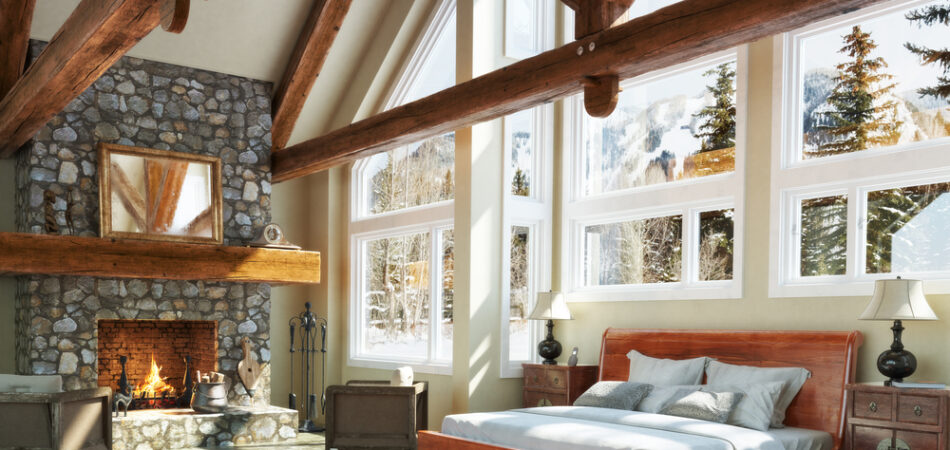
Clerestory windows are another powerful tool in mountain home design. Positioned high on a wall above standard window height, they admit light deep into a room without sacrificing wall space below for furniture or art. In great rooms with vaulted ceilings, clerestory windows can introduce a secondary layer of light that makes the entire space feel lifted and airy.
How to Maximize Natural Light Home Design Through Interior Choices
Window placement gets the light into the building, but your interior design choices determine how far that light travels and how effectively it fills every corner of the home. Learning how to maximize natural light home design on the inside is just as important as the architectural decisions made on the outside.
Start with your color palette. Light-toned walls, ceilings, and floors reflect and amplify natural light, bouncing it deeper into the room. In a Montana vacation home, pale whites, warm creams, soft greiges, and stone-inspired neutrals work beautifully because they complement the natural materials and colors visible through the windows without competing with them.
Mirrors and reflective surfaces are underutilized in mountain home interiors. Strategically placed mirrors can effectively double the visual impact of a window by reflecting the view and the light across the room. A large mirror positioned on a wall perpendicular to a picture window creates the impression that the view continues on all sides.
Keep window treatments simple and functional. Heavy drapes and ornate valances may suit other design styles, but in a Montana vacation home they obscure the very views you paid a premium to enjoy. Opt instead for clean roller shades, simple linen panels, or motorized solar shades that can be adjusted without framing the window with unnecessary bulk.
Open floor plans also support the goal of maximizing natural light. When interior walls are removed or minimized, light from windows on one side of the home can travel across the entire floor plate to brighten rooms on the opposite side. A great room that connects the kitchen, dining area, and living space beneath a vaulted ceiling creates a single luminous volume that feels dramatically larger than the sum of its parts.
Architectural Features That Frame and Celebrate Montana Views
Beyond windows themselves, certain architectural features can elevate how mountain home views are experienced from inside the structure. These elements transform a functional opening into a carefully composed frame, turning your view into something closer to a living piece of art.
Covered decks and wraparound porches extend the living space outward while providing shade that makes large glazed openings more comfortable in summer. The transition from interior to exterior becomes gradual rather than abrupt, and the deck itself becomes a foreground element that adds depth to the view.
Floor-to-ceiling glass walls, sometimes called curtain walls, are increasingly practical thanks to advances in insulated glazing technology. In a Montana vacation home, a curtain wall facing the primary view axis creates an almost seamless visual connection between the interior and the landscape. Combined with a polished concrete or wide-plank wood floor that appears to flow toward the glass, this effect can be genuinely breathtaking.
Recessed window seats built into deep-sill windows invite occupants to sit close to the glass and immerse themselves in the view. These built-in features also serve a practical purpose by providing extra seating and storage while keeping the window zone clear of furniture that might block sightlines.
Roof overhangs sized according to solar angles protect large south and west-facing windows from summer overheating while allowing lower winter sun to penetrate fully. Getting these dimensions right requires careful calculation based on your property’s latitude, but the payoff in comfort and energy efficiency is substantial.
Conclusion
Designing a Montana vacation home around its views and natural light is one of the most rewarding challenges in residential architecture. By combining smart window placement architecture with thoughtful interior choices and purposeful architectural features, you can create a home that feels deeply connected to its landscape every hour of every day. Montana offers some of the most spectacular scenery on the continent, and with the right design approach, your vacation home will honor that scenery in every room, in every season, and in every quality of light.
Need Residential Design Construction in Kalispell, MT?
Our team here at Lyndon L. Steinmetz Design Studio, LLC is regionally known for helping people turn their residential design visions into reality. Our work has been featured in regional and national publications and ranges from conceptual design to consulting services. See how our three decades of experience can help you find elegance and luxury in some of nature’s most rustic locations. Call us today for a consultation.